 creator@scienceexplore.site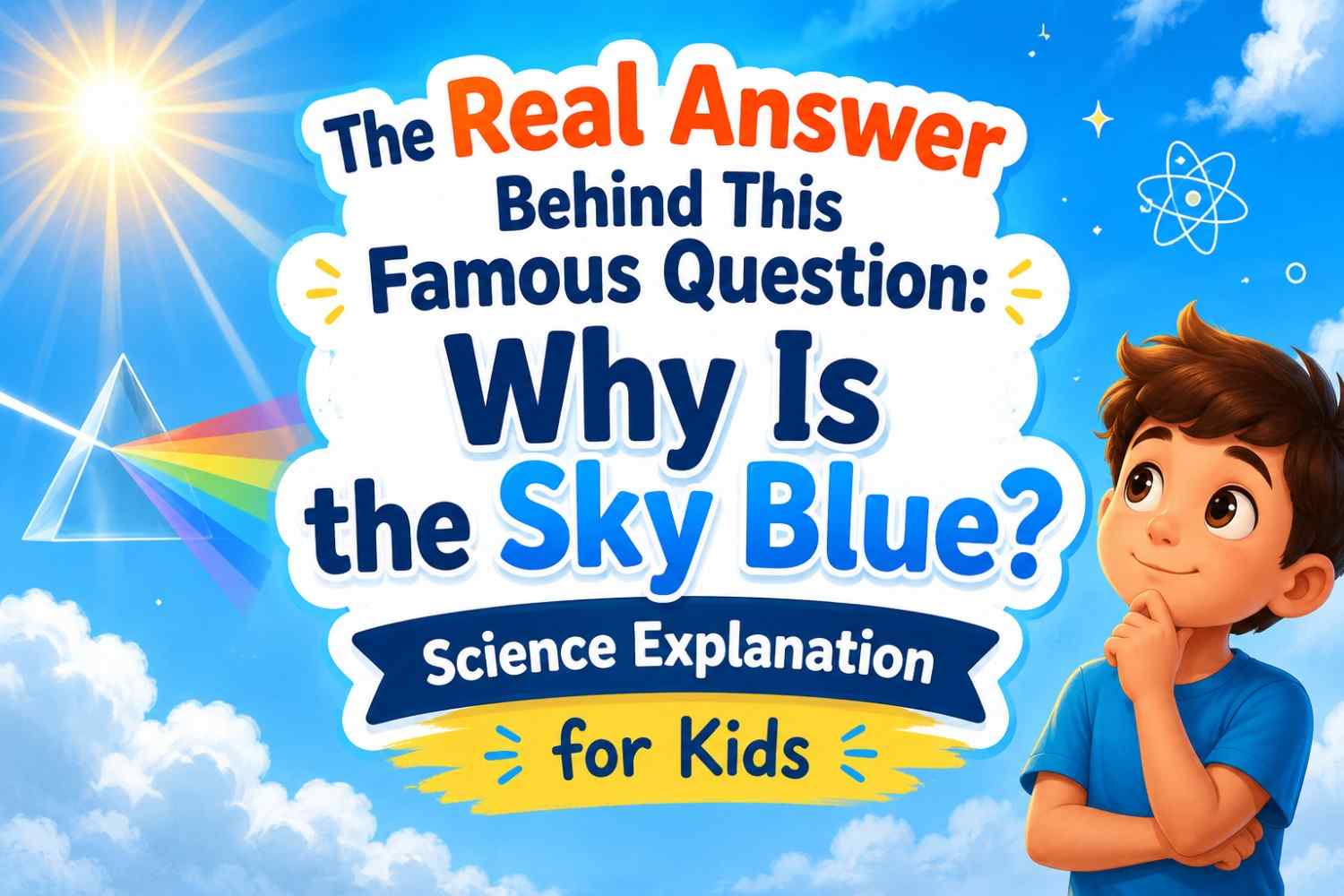
Introduction
One of the oldest questions children ask is: why is the sky blue science explanation for kids? It’s such a simple question with an amazing answer! Why is the sky blue science explanation for kids involves physics, light, and the Earth’s atmosphere. This guide makes why is the sky blue science explanation for kids accessible and exciting.
Understanding the science explanation of why the sky is blue helps you see how light works. Why is the sky blue? Science explanations for kids reveal that the sky’s color is determined by physics. By the end, you’ll know why the sky is blue science explanation for kids and never take blue skies for granted again.
What Is Light?
Before answering the “why is the sky blue?” science explanation for kids, we need to understand light. Why is the sky blue? Science explanation for kids depends on knowing that light travels as waves. Light has different colors, and the science explanation for why the sky is blue for kids is about understanding which colors travel in the atmosphere.
Sunlight appears white, but it contains all colors of the rainbow. Why is the sky blue? Science explanations for kids reveal that red, orange, yellow, green, blue, indigo, and violet all mix to create white light. This combination is called the visible spectrum. Understanding why the sky is blue science explanation for kids requires knowing light’s spectrum.
Each color of light has a different wavelength. Why is the sky blue? Science explanation for kids notes that wavelength is the distance between light waves. Red light has long wavelengths, while violet light has short wavelengths. All other colors fall between them. Why is the sky blue? Science explanations for kids connect to these wavelength differences.
What Is Rayleigh Scattering?
The answer to why the sky is blue, a science explanation for kids, involves Rayleigh scattering. This is the process where light bounces off tiny particles in the atmosphere. The “why is the sky blue?” science explanation for kids depends entirely on Rayleigh scattering.
Rayleigh scattering affects short-wavelength light more than long-wavelength light. Blue light has shorter wavelengths than red light. Why is the sky blue? Science explanations for kids show that blue light scatters approximately 10 times more than red light! This difference explains sky color.
Rayleigh scattering is named after John Strutt, the Lord Rayleigh. This British physicist discovered why the sky is blue: a science explanation for kids in 1871. Why the sky is blue science explanation for kids was a mystery until he explained Rayleigh scattering. His discovery earned him the Nobel Prize!
How Light Travels
Light from the sun travels through space to Earth. The “Why is the sky blue?” science explanation for kids begins with sunlight entering the atmosphere. When light enters the atmosphere, it interacts with gas molecules and tiny particles. This interaction causes the “why is the sky blue?” science explanation for kids’ color.
The atmosphere consists mainly of nitrogen and oxygen molecules. These molecules are much smaller than the wavelength of visible light. Size difference is crucial for the “Why is the sky blue?” science explanation for kids. The science explanation for why the sky is blue for kids depends on particles being smaller than light wavelengths.
When light hits these tiny molecules, it scatters in all directions. However, short-wavelength light scatters more easily than long-wavelength light. The science explanation for why the sky is blue occurs because blue light (short wavelength) scatters much more than red light (long wavelength). This selective scattering creates the “why is the sky blue?” science explanation for kids.
Why Blue and Not Violet?
You might ask: if violet has shorter wavelengths than blue, why is the sky blue (science explanation for kids) instead of violet? Why is the sky blue? Science explanations for kids have a good explanation for this question.
Violet light scatters more than blue light. So theoretically, the sky should be violet! Why is the sky blue science explanation for kids not violet? For three main reasons.
Reason 1: The Sun’s Output
The sun produces less violet light than blue light. Why is the sky blue? Science explanations for kids show that the sun’s energy peaks in the blue-green range. Less violet means less violet scattering. Understanding why the sky is blue science explanation for kids includes knowing sunlight composition.
Reason 2: Atmospheric Absorption
The upper atmosphere absorbs much violet light before it reaches us. Why is the sky blue? Science explanations for kids note that atmospheric layers filter violet. This reduces violet light availability. Why is the sky blue? Science’s explanation for kids shows nature’s filtering system at work.
Reason 3: Human Eye Perception
Our eyes are less sensitive to violet light than to blue light. Why is the sky blue? Science explanations for kids reveal that our perception affects what we see. Even if violet were scattered equally, we’d see it as less intense. Why is the sky blue? Science explanations for kids depend partially on our biology.
Combined, these factors make the “why is the sky blue?” science explanation for kids: we see blue, not violet. Understanding why the sky is blue—a science explanation for kids—requires considering multiple factors.
Different Skies at Different Times
Why Is the Sky Blue Science Explanation for Kids at Noon?
At noon, the sun is high above. Why is the sky blue? The science explanation for kids is the most intense blue color at this time. Why is the sky blue? The science explanation for kids is that it appears brightest because light travels the shortest distance through the atmosphere. Less atmosphere means less scattering.
Light must pass through less dust and fewer particles at noon. Why is the sky blue? Science explanation for kids: it shows pure blue because the path is direct. This is why the sky-blue science explanation for kids’ time is the clearest.
Why Is the Sky Red or Orange at Sunrise and Sunset?
This seems to contradict the “Why is the sky blue?” science explanation for kids! But it explains Rayleigh scattering perfectly. Why is the sky blue? Science explanations for kids reveal why sunsets are red and orange.
At sunrise and sunset, the sun is low on the horizon. Light must travel through much more atmosphere to reach you. Why is the sky blue? Science explanations for kids show that this extra distance matters greatly. Blue light scatters completely after traveling through so much atmosphere. Why is the sky blue? Science explanation for kids explains why blue disappears.
The blue light scatters sideways and doesn’t reach your eyes. Only red and orange light, which scatter less, reach you directly. Why is the sky blue? Science explanations for kids reveal that scattered blue light colors the sky away from the sun. This is why the sky is blue: the science explanation for kids’ observations shows complementary colors.
What About Gray or White Skies?
Why is the sky blue? Science explanations for kids change on cloudy days. Clouds scatter light differently than clear air. Why is the sky blue? Science explanation for kids: It becomes white or gray when clouds are present.
Clouds contain water droplets much larger than molecules. These droplets scatter all colors equally. Why is the sky blue? Science explanations for kids show that large particles don’t prefer short wavelengths. All colors mix together, creating white or gray. Understanding why the sky is blue science explanation for kids includes knowing cloud effects.
Why is the sky blue? Science explanation for kids: It disappears when clouds block direct sunlight. This is why the sky is blue science explanation for kids’ situations shows that clouds prevent the effect.
Dark Skies at High Altitudes
Mountains and airplanes reveal something about why the sky is blue: a science explanation for kids. At high altitudes, the sky appears darker blue. Why is the sky blue? Science explanation for kids: It gets more intense at elevation!
Why is the sky blue? Science explanation for kids is more dramatic higher up because less atmosphere is above you. Less atmosphere means less scattering. Why is the sky blue? Science explanation for kids becomes more saturated and darker. This is why the sky is blue: the science explanation for kids’ observations shows altitude’s importance.
In space, the sky is completely black. Why is the sky blue? The science explanation for kids requires an atmosphere. Without air molecules, there’s no scattering. This is why the sky is blue: the science explanation for kids is true and shows that the atmosphere is essential.
The Color of the Moon
The moon sometimes appears yellow, orange, or red. Why is the sky blue? Science explanations for kids explain this too! When the moon is low on the horizon, blue light scatters away. Yellow, orange, and red light reaches you, coloring the moon. Understanding why the sky is blue science explanation for kids includes understanding moon color.
Other Planet Skies
Why is the sky blue? Science explanations for kids apply to other planets too! Different atmospheres create different sky colors. Why is the sky blue? Science explanation for kids shows Earth’s blue is unique.
Mars has a reddish-tinted sky. Why is the sky blue? Science explanations for kids note that Mars’s atmosphere is different from Earth’s. Mars’s dust and particles scatter light differently. Why is the sky blue? The science explanation for kids is specific to Earth’s composition.
Venus has a yellow-orange sky. Why is the sky blue? Science explanations for kids reveal that Venus’s thick atmosphere scatters light uniquely. Understanding why the sky is blue science explanation for kids requires knowing planetary composition matters.
The Role of Particles and Pollution
Why is the sky blue? Science explanations for kids change with air pollution. Dust particles and pollutants affect scattering. Why is the sky blue? The science explanation for kids becomes hazy when pollution increases.
More particles means more scattering of all colors. Why is the sky blue? Science explanation for kids becomes less vivid in polluted areas. This is why the sky-blue science explanation for kids’ observations has environmental implications.
Pollution reduces visibility and sky clarity. Why is the sky blue? Science explanations for kids remind us that clean air matters. Understanding why the sky is blue, a science explanation for kids, encourages environmental protection.
Why Is the Sky Blue Science Explanation for Kids: A Complete Summary
The sky is blue because
- Sunlight contains all colors—the science explanation for why the sky is blue for kids starts with white sunlight entering Earth’s atmosphere.
- Atmosphere has tiny molecules—The science explanation for why the sky is blue for kids depends on nitrogen and oxygen molecules being smaller than light wavelengths.
- Short wavelengths scatter more—The science explanation for why the sky is blue happens because blue light has shorter wavelengths than red light.
- Blue scatters in all directions—The science explanation for why the sky is blue for kids shows that blue light bounces everywhere.
- Blue light reaches your eyes—The science explanation for why the sky is blue occurs because scattered blue light comes from many directions.
- You see blue from all directions—the science explanation for kids about why the sky is blue results in a blue sky overhead.
Violet doesn’t make the sky purple because less violet is produced, some is absorbed, and our eyes are less sensitive to it. Why is the sky blue? Science explanation for kids is the perfect combination of physics, atmospheric science, and biology.
Fun Experiments to Understand Why Is the Sky Blue: A Science Explanation for Kids
Experiment 1: Light Scattering Demonstration
Mix water in a clear jar with a small amount of milk. Shine a flashlight through the jar. Why is the sky blue? Science explanation for kids becomes visible! The milk particles scatter light like atmospheric molecules. Why is the sky blue? Science explanation for kids appears as a blue glow. This is why the sky is blue: the science explanation for kids’ hands-on activity demonstrates Rayleigh scattering.
Experiment 2: Sunset in a Glass
Fill a glass with water and add a drop of food coloring. Look through it with a light behind it. Why is the sky blue? Science explains color changes with viewing angle. This is why the sky is blue science explanation for kids experiment demonstrates angle-dependent scattering.
Experiment 3: Observe Sunrise and Sunset
Watch the real sky during sunrise and sunset. Why is the sky blue? Science explanations for kids change dramatically. Note the color progression: red, orange, yellow, then white. This is why the sky is blue: the science explanation for kids’ observations confirms Rayleigh scattering principles.
Images & Media Suggestions
Image 1: Diagram showing light wavelengths and how different colors scatter in the atmosphere
- Placement: After “What Is Rayleigh Scattering” section
- ALT Text: “Light wavelength diagram showing why is the sky blue: science explanation for kids with short wavelength blue light scattering more than red light”
Image 2: Infographic showing sky color changes throughout the day from sunrise to sunset
- Placement: After “Different Skies at Different Times” section
- ALT Text: “Sky color throughout the day infographic for why is the sky blue science explanation for kids showing sunrise, noon, and sunset variations”
FAQ Section
Q1: Is the sky actually blue, or does it just look blue?
The sky looks blue because of how light scatters. Why is the sky blue? Science explanations for kids show that scattering makes it appear blue. The color is real—it’s light’s behavior, not our imagination. Understanding why the sky is blue, a science explanation for kids, confirms the reality of observed color.
Q2: Why do astronauts see a black sky in space?
There’s no atmosphere in space, so no scattering occurs. Why is the sky blue? The science explanation for kids requires atmosphere. Without it, there’s no scattering, so the sky appears black. This is why the sky is blue science explanation for kids. The fact shows the atmosphere’s importance.
Q3: Can the sky be other colors?
Yes! Why is the sky blue science explanation for kids is specific to clear conditions. Cloudy skies are gray or white. Polluted skies are hazy. Sunset skies are red and orange. The “Why is the sky blue?” science explanation for kids is one scenario among many.
Q4: Does the sky color change with the season?
Seasonally, the sun’s angle changes. Why is the sky blue? Science explanation for kids: Intensity varies with season. Winter sunlight travels through more atmosphere. Why is the sky blue? Science explanations for kids show that seasonal changes affect sky appearance.
Q5: Why is the sky more blue over the ocean?
Ocean water reflects the blue sky, intensifying the blue appearance. Why is the sky blue? Science explanation for kids: Over water, it seems more vibrant. The reflection enhances the effect. Understanding why the sky is blue: a science explanation for kids includes appreciating environmental reflections.
Conclusion
Now you know why is the sky blue science explanation for kids! The answer involves light, the atmosphere, and how waves interact with molecules. Why is the sky blue? Science explanations for kids are pure physics at work every day. Next time you look up at a blue sky, remember why the sky is blue: science explanation for kids happens.
Understanding why the sky is blue, a science explanation for kids, gives you insight into light’s behavior. Why is the sky blue? Science explanations for kids show that nature operates on predictable principles. Science explains beauty! Why is the sky blue? A science explanation for kids reminds us that scientific understanding enhances appreciation for the world.
Share why is the sky blue science explanation for kids with others. When someone asks, “Why is the sky blue?” science explanation for kids, you now have a complete answer! Help them understand why the sky is blue with a science explanation for kids through Rayleigh scattering. Making others understand why the sky is blue: a science explanation for kids spreads scientific knowledge.
Call to Action: Document sky colors throughout a week! Take photos or draw pictures of the sky at different times and weather conditions. Create a journal explaining the scientific explanation for why the sky is blue for kids in different situations. Share your why-is-the-sky-blue science explanation for kids’ observations with friends and family!
External Links (Authority Sources)
- Khan Academy – Light and Vision – Comprehensive physics explanations of light behavior
- National Geographic – Why Is Sky Blue – Scientific explanation of atmospheric optics
- NASA Science Spectrum – Information about light, wavelengths, and atmospheric phenomena
- Smithsonian Magazine – Light and Color – Articles about light science and perception
- PBS Learning Media – Physics of Light – Educational videos about light and color